

At Anime Expo 2026, The Kitsune Network spoke with AOASHI producer Junichi Katsutani about realistic soccer, Ashito’s defining moments, and how season two expands both the action and human drama.
Sports anime can turn a single pass, sprint, or last-second decision into the kind of moment that leaves fans holding their breath. But AOASHI has always aimed beyond the thrill of competition. Beneath its tactics and match-day intensity is a coming-of-age story about failure, family, ambition, and learning how to see the game differently.
During Anime Expo 2026, The Kitsune Network’s Krystal sat down with producer Junichi Katsutani to discuss what separates AOASHI from other sports anime, the emotional scene that convinced him the manga belonged on television, and what viewers can look forward to as the story continues into season two.
At the heart of his answer was a simple idea: AOASHI works because its technical authenticity and human storytelling are never treated as separate experiences.
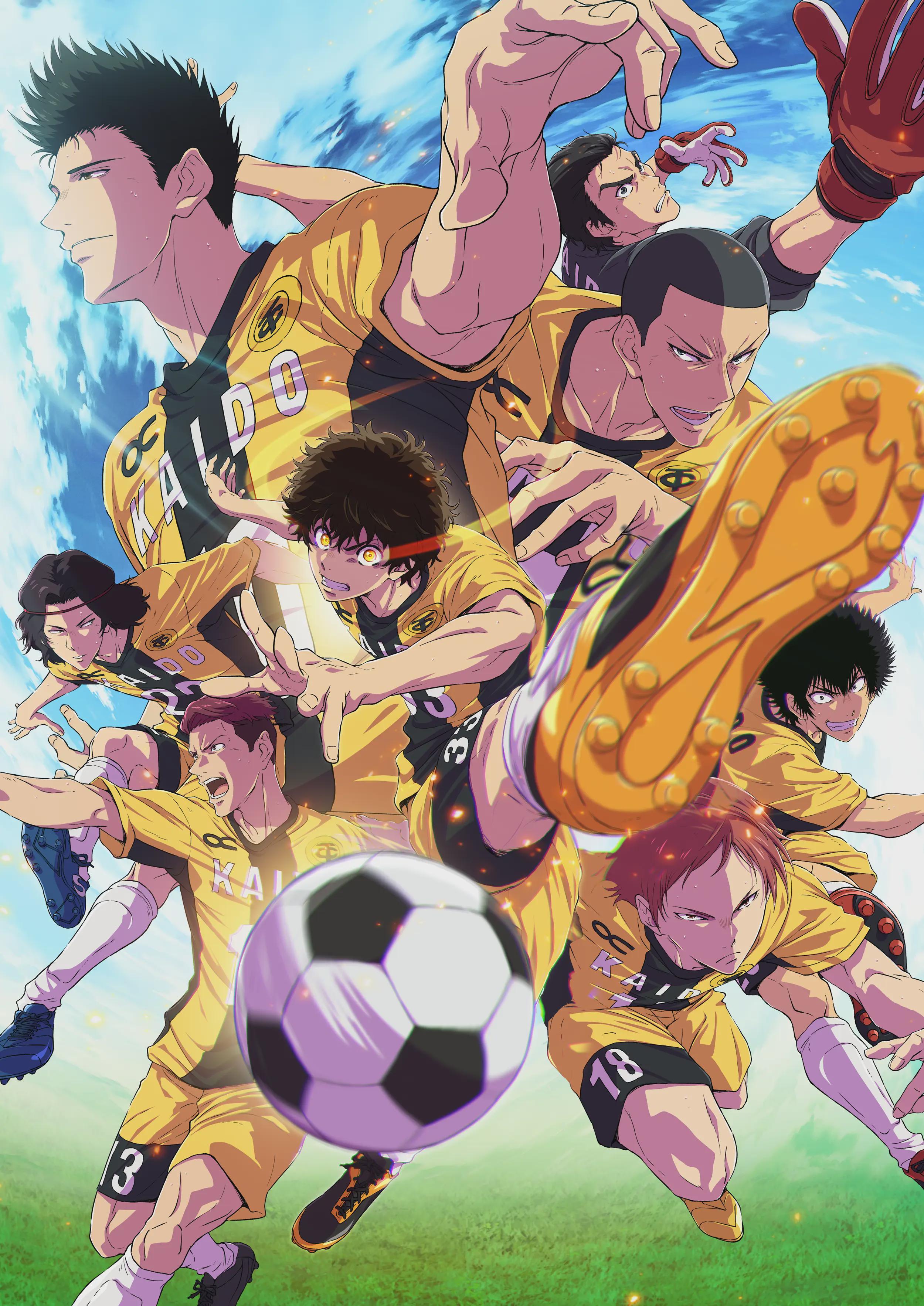
Real Soccer With Real Human Stakes
For Katsutani, two qualities define the series.
“I think there are two major differences,” he explained. “First, the story incorporates realistic soccer techniques and strategies. Second, there is a strong element of human drama, not only between Ashito and his teammates, but also between him and his family, including his mother and brother. Those two elements are probably the series’ greatest appeals.”
Soccer fans can dig into the formations, positional responsibilities, and split-second decisions that shape each match. Viewers who have never followed the sport, however, still have an easy way into the story through Ashito Aoi’s relationships and personal growth.
Katsutani described the strategy as an added bonus rather than a barrier to entry. Ashito begins his journey as a slightly arrogant and inexperienced player, but his confidence is repeatedly tested as he discovers how much he still has to learn.
“You don’t need to understand the finer details of soccer to appreciate his journey,” Katsutani said. “Ashito begins as a slightly arrogant and very unskilled player. Over time, he is humbled, begins aiming higher, and works toward the Premier League. His personal growth is something anyone can relate to.”
Even viewers who could not explain an offside trap can understand the experience of trying to level up, entering a more competitive world, and realizing that raw enthusiasm is only the beginning.
The Letter That Made AOASHI Feel Ready for Anime
Before the tactical battles and major turning points, one quieter moment convinced Katsutani that AOASHI could become something special in animation: the episode-five scene in which Ashito, having left Ehime for Tokyo, reads a letter from his mother.
“He is deeply moved and cries after reading it,” Katsutani recalled. “When I saw that scene, I felt it would be wonderful to bring to life through animation.”
The scene captures the emotional cost of Ashito’s ambition. His dream requires him to leave behind the people and place that shaped him, making his journey about far more than winning matches.
“What makes it especially powerful is that you don’t need to be a soccer fan to appreciate it,” Katsutani added. “It’s a very human moment that many people can relate to: leaving home, family, and friends. That scene was particularly special to me, and it became an important motivation for adapting the series into an anime.”
It is a moment built around separation, gratitude, and the difficult realization that moving toward a dream sometimes means moving away from home. That emotional honesty gives AOASHI a connection to viewers who may have arrived for the soccer but stayed for Ashito and his family.
Turning Manga Panels Into Motion
Adapting a sports manga presents a particular challenge. The anime must preserve the detail that makes each play believable while transforming still panels into movement with speed, weight, and impact.
Katsutani said the production team never wanted the action to overshadow the relationships at the center of the manga.
“The manga places a strong emphasis on human drama, particularly Ashito’s relationships with the people around him: his friends, teammates, family, and love interest,” he explained. “Aside from the soccer itself, that is a very important part of the story’s appeal, so I wanted to make sure we portrayed it properly.”
At the same time, the matches needed to feel just as dynamic in animation as they did on the page.
“Even on the page, many of the match scenes feel like moving pictures,” Katsutani said. “In season two, as I mentioned during this morning’s panel, we placed even more focus on delivering strong action sequences.”
Finding that balance required an ongoing conversation between the producer, writer, and director. The team wanted to retain the manga’s technical soccer elements without sacrificing the breathing room needed for its character drama.
“Our goal was to preserve the technical aspects that make AOASHI special while also giving the storytelling, especially the human drama, enough room,” Katsutani explained. “It was a constant discussion to find the right balance without losing the manga’s core appeal.”

The Turning Point Where the Story Truly Begins
The following section discusses a major turning point from AOASHI season one.
The letter from Ashito’s mother was the first scene to leave a major impression on Katsutani, but another season-one moment became equally important: Coach Fukuda’s decision to move Ashito from striker to defender.
For a player who defines himself through scoring goals, the decision is devastating. It also overturns the destination many viewers may have expected for a sports-anime protagonist.
“That is a huge turning point,” Katsutani said. “In many ways, it is where the story truly begins. The decision is a tremendous shock to Ashito, and it was probably just as surprising for readers experiencing it for the first time.”
The moment forces Ashito to reconsider not only how he plays, but also who he believes he can become. What initially feels like the destruction of his dream becomes an invitation to evolve.
Katsutani also highlighted the support Ashito receives from his mother and Hana, who approach his struggle from outside the competitive world consuming him. One of his most memorable scenes comes when Hana attempts to pull Ashito out of his despair by telling him, bluntly, that it is “only soccer.”
“That is something only a person who isn’t directly involved in soccer could say, which is why it has such an impact,” Katsutani explained. “It’s a very memorable and dramatic scene.”
Season 2 Widens the Field
As Ashito rises through the ranks, season two will expand the series beyond its established group. New A-team players and rival teams will bring fresh personalities, challenges, and perspectives to the pitch.
Katsutani stressed that these additions are more than a larger roster of skilled opponents. The players may initially appear exceptional or even untouchable, but the story gradually reveals the pressure, weaknesses, and personal concerns each of them carries.
“Beyond Ashito’s central story, viewers will learn much more about these different players,” he said. “The human drama expands considerably from season one to season two, so I hope viewers pay attention to that and enjoy the series.”
For fans who love the character-focused arcs of ensemble sports anime, that broader perspective could become one of the new season’s biggest strengths. Every position brings a different responsibility, and every player has something to prove.
A Message That Reaches Beyond Soccer
Katsutani hopes newcomers and returning fans alike find motivation in Ashito’s refusal to remain defeated.
“His story isn’t limited to soccer,” he said. “It explores what it means to become a professional and to keep aiming higher.”
Ashito’s progress is rarely clean or comfortable. He makes mistakes, has his assumptions challenged, and is forced to rebuild his understanding of the game. What makes him inspiring is not perfection, but his willingness to stand back up and keep moving.
“It may not be easy to remain as positive and persistent as Ashito,” Katsutani said, “but I hope his journey gives someone the extra push they need to work harder and pursue their own goals.”
That may be AOASHI’s most universal strength. Whether viewers arrive as devoted soccer fans or simply love a strong character-driven anime, Ashito’s journey delivers the same reminder: aiming higher often means accepting that growth will change the way you play, the way you see yourself, and even the dream you thought you were chasing.
This article is based on The Kitsune Network’s interview with Junichi Katsutani at Anime Expo 2026. Interview responses have been lightly edited for clarity.
Watch our full interviews above, and stay tuned to The Kitsune Network for more anime coverage, cast interviews, and convention features.