Renowned anime creator Shoji Kawamori is ready to release his latest original feature film, Labyrinth in North America, marking a highly anticipated return to long-form storytelling from one of the industry’s most influential visionaries.
Best known for his work on the Macross franchise and his contributions to mechanical design and worldbuilding across decades of anime, Kawamori’s new project is already drawing attention for its ambitious concept and creative pedigree.
A New Original Vision
Labyrinth is described as an original anime film that explores complex themes through a visually immersive narrative. The film’s plot is described as follows; Shiori is a typical high school student who dreams of online stardom, but struggles to capture attention. After an embarrassing video of her goes viral, she gets trapped in her smartphone and replaced by a charismatic alter ego. As the doppelganger charms the internet and devises a nefarious plot to replace mankind with brainrot, Shiori must partner with other online outcasts to stop her digital counterpart and reclaim her life in the real world.
Additionally, Labyrinth stars globally popular Japanese girl group ATARASHII GAKKO!’s Suzuka as “Shiori Maezawa” in her voice acting debut, joined by Taizo Harada as “Komori” and Takuto Teranishi, from the boy group timelesz, in his debut acting role as “Suguru Kagami”. Fans of ATARASHII GAKKO! can also look forward to their performance of the film’s theme song “Sailor, Sail On,” with additional music by yonkey.
Kawamori has long been recognized for crafting narratives that balance spectacle with introspection, and Labyrinth appears poised to continue that legacy. The project is expected to feature intricate worldbuilding and symbolic storytelling elements, hallmarks of his past works.
INTERVIEW WITH SHOJI KAWAMORI
To learn more about the creative vision behind Labyrinth, our VTuber talent Krystal Vee, spoke directly with Shoji Kawamori about the film’s origins, themes, and what audiences can expect from this ambitious new project,
Kawamori’s Legacy in Anime
Over the course of his career, Kawamori has played a pivotal role in shaping modern anime, not only as a director but also as a designer and conceptual creator. In addition to Macross, his credits include work on titles such as Aquarion and AKB0048, where he explored themes of identity, music, and society.
His influence extends beyond storytelling—Kawamori is widely regarded as one of the pioneers of transforming mecha design, helping define the look and functionality of variable fighter systems that remain iconic today.
Watch Labyrinth Now
Tickets are now on sale for Labyrinth, and will be released in theatres for two nights only in Japanese with English subtitles and English-dubbed from May 10–11.
GKIDS, the acclaimed animation distributor and producer, also revealed a new English dub trailer for the film. The English dub voice cast stars Shay Rudolph as “Shiori”, Jesse Inocalla as “Komori”, Nicholas Leung as “Suguru”, Patrick Mealey as “Yamada”, and Brianna Gentilella as “Kirara”.
English Trailer
Japanese Trailer
For more content Subscribe to The Kitsune Network!
As Trigun Stargaze prepares to bring the long-running sci-fi western saga to its English dub conclusion, the English voice cast is reflecting on the emotional weight, character growth, and legacy behind the final installment.
During a recent press junket at Sassafras Saloon, a Los Angeles old western themed bar, voice actors Johnny Yong Bosch (Vash the Stampede), Sarah Roach (Meryl Stryfe), David Matranga (Nicholas D. Wolfwood), and Alexis Tipton (Milly Thompson) shared insights into their performances and what fans can expect as the story reaches its climax.
Serving as the final chapter in Studio Orange’s modern Trigun adaptation, Stargaze builds upon the themes of survival, morality, and humanity that have defined the series, while pushing its characters toward deeply personal and often painful resolutions.
Closing the Curtain on TRIGUN
As the final installment, Stargaze carries the responsibility of concluding a story that has resonated with fans for decades.
For the cast, being part of that conclusion is both meaningful and bittersweet. The journey of these characters—particularly Vash—has been defined by enduring questions about peace, sacrifice, and what it means to remain compassionate in an unforgiving world.
With the finale approaching, the actors expressed hope that audiences will walk away with a renewed appreciation for the story’s message and the emotional journeys that brought it to its end.
Watch Our Full Interview with the TRIGUN STARGAZE Cast
To hear directly from the English voice cast, check out our full interview where we dive deeper into character motivations, and reflections on the series finale.
From Vash’s internal struggles to the evolving dynamics between Meryl, Wolfwood, and Milly, the conversation offers fans a closer look at the performances shaping Trigun Stargaze’s final chapter.
Final Thoughts
As Trigun Stargaze brings this chapter of the franchise to a close, it stands as a culmination of everything that has defined the series—philosophical depth, emotional storytelling, and unforgettable characters.
The world of KPop Demon Hunters is stepping off the screen and into real life as McDonald’s and Netflix unveil a new collaboration that transforms the film’s iconic rivalry into an interactive dining experience.
Beginning March 31, fans across the United States will be able to choose their side with two limited-time meals inspired by the film’s central groups — HUNTR/X and the Saja Boys — alongside exclusive collectibles and digital rewards.
The campaign blends anime-style storytelling, K-pop energy, and Korean-inspired flavors, creating an experience that goes beyond a traditional fast-food promotion and taps directly into the film’s growing global fandom.
Pick Your Side: HUNTR/X vs. The Saja Boys
At the center of the collaboration are two themed meals designed to reflect each group’s identity.
The Saja Boys Breakfast Meal channels the group’s fiery, charismatic energy with a spicy Sausage McMuffin with Egg, crispy hash browns, and a drink — a bold start for fans aligning with the rival boy group.
Meanwhile, the HUNTR/X Meal takes the spotlight for the rest of the day, featuring 10-piece Chicken McNuggets, a medium drink, and unique additions like Ramyeon McShaker fries and two signature sauces — Hunter Sauce and Demon Sauce — inspired by the group’s dynamic personalities.
The menu also incorporates Korean flavor influences, reinforcing the cultural roots that define KPop Demon Hunters.
Collectibles and Exclusive Fan Access
Each meal comes with a collectible photocard pack tied to either HUNTR/X or the Saja Boys, alongside a special “Derpy” access card. By scanning the QR code through the McDonald’s app, fans can unlock exclusive content and participate in a campaign-wide “Battle for the Fans” event, culminating in a final reveal of the winning group.
This interactive element turns the collaboration into more than a promotion — it becomes a fan-driven experience that mirrors the competitive spirit of the film itself.
A Sweet Newcomer Hits the Menu
Rounding out the collaboration is the debut of the Derpy McFlurry, a new dessert featuring vanilla soft serve blended with berry popping pearls and wild berry sauce. Inspired by the film’s mascot-like character, the treat adds a playful finishing touch to the lineup.
Derpy McFlurry
Expanding Anime’s Cultural Footprint
Directed by Maggie Kang and Chris Appelhans, KPop Demon Hunters follows a K-pop girl group balancing global stardom with secret lives as demon hunters, all while facing a rival boy band hiding a darker truth.
With this collaboration, McDonald’s and Netflix continue to push anime and animation-inspired properties further into mainstream culture — not just through streaming, but through real-world, interactive fan experiences.
For anime fans, K-pop listeners, and collectors alike, the question now becomes simple:
Which side are you on?
The KPop Demon Hunters meals and promotional rewards will be available for a limited time through April 26 at participating McDonald’s locations nationwide.
For more content Subscribe to The Kitsune Network!
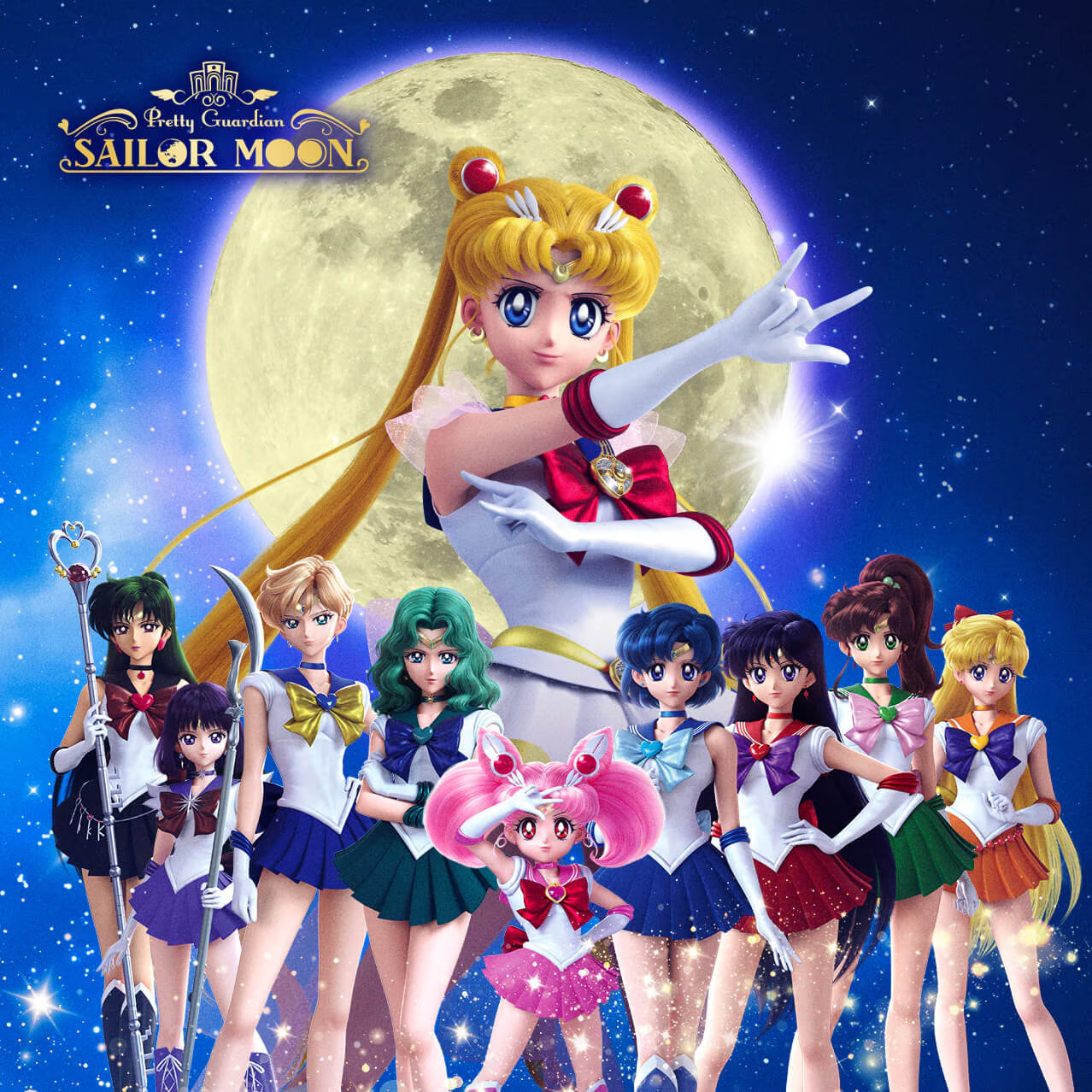
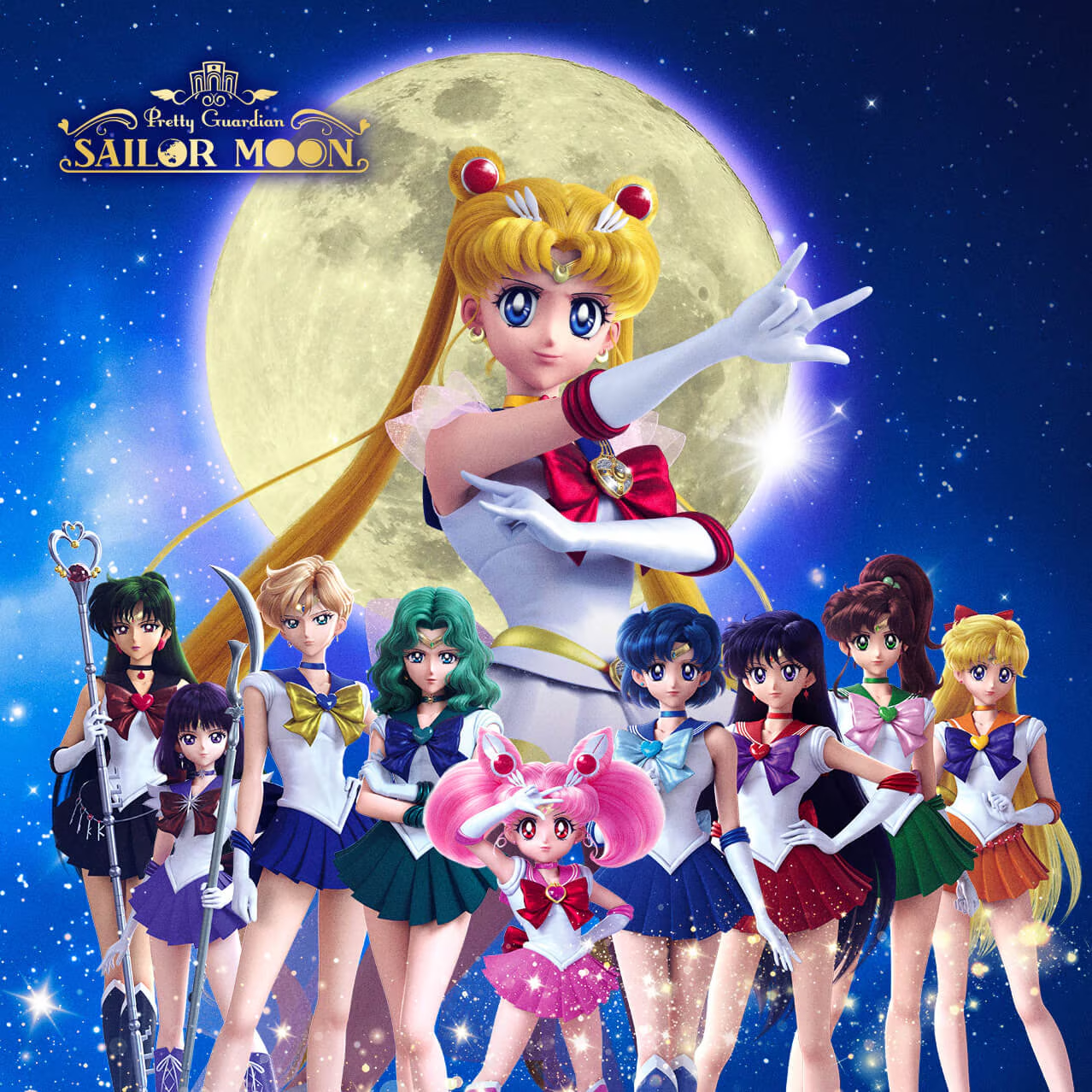
A new chapter in anime-themed entertainment is set to arrive in Southern California as Universal Studios Hollywood announces the debut of Pretty Guardian Sailor Moon: The Miracle – Moon Palace Chapter Deluxe, an original Japanese CG anime short film, as part of its upcoming Universal Fan Fest Nights event.
The experience will run on select nights from April 23 through May 16, offering fans a limited-time opportunity to step into the world of Pretty Guardian Sailor Moon through a cinematic and interactive showcase.
A New Sailor Moon Story Comes to Life
Originally introduced as part of Universal Studios Japan’s “Cool Japan” initiative, the CG anime short will make its U.S. debut inside the DreamWorks Theatre. The presentation will feature Japanese audio with English subtitles and center on Super Sailor Moon as she faces a new enemy seeking the Legendary Silver Crystal.
Guests will be immersed in a story-driven experience that blends animation with audience engagement, encouraging viewers to support Sailor Moon as she battles to restore peace to the Moon Palace.
Universal Fan Fest Nights Expands Anime and Pop Culture Offerings
Universal Fan Fest Nights is a separately ticketed, after-hours event designed to celebrate fandom across anime, gaming, film, and television. The event features immersive environments, live entertainment, cosplay opportunities, themed food and merchandise, and character interactions.
Alongside the Sailor Moon attraction, the 2026 lineup includes a wide range of experiences:
ONE PIECE: Grand Pirate Show — A live-action stage production inspired by the globally popular anime, featuring action-packed performances and fan-favorite characters.
The addition of Pretty Guardian Sailor Moon: The Miracle – Moon Palace Chapter Deluxe underscores the continued global expansion of anime as a central pillar in themed entertainment. By bringing a Japan-originated experience to U.S. audiences, Universal Studios Hollywood is further bridging international fandoms through immersive storytelling.
As anime continues to grow in popularity worldwide, events like Universal Fan Fest Nights highlight how franchises such as Sailor Moon are evolving beyond the screen—offering fans new ways to engage with beloved characters and stories in real-world environments.
For more content Subscribe to The Kitsune Network!
In recent years, manga readers have increasingly embraced works that challenge conventional storytelling. One such title is HORIZON, a series that blends philosophical themes, grounded realism, and an unusual narrative tone that shifts between genres.
Created by Shiten Akiyama, HORIZON explores the relationship between fiction and reality while following a protagonist navigating personal history and unresolved emotions. With its distinct pacing, cinematic composition, and thought-provoking ideas, the series has sparked curiosity among readers searching for something outside traditional manga structures.
Front cover of HORIZON (Japanese) | (c) 秋山視点/少年画報社
Although the manga itself remains relatively niche in Japan, HORIZON recently circulated widely on social media following controversy surrounding creator Shiten Akiyama posting an English-translated version of the first chapter online in an effort to reach overseas readers—a move that reportedly drew concern from the series’ Japanese publisher.
In this interview with The Kitsune Network, Akiyama-sensei discusses the origins of HORIZON, the themes that shaped its creation, and how his perspective on storytelling continues to evolve.
Interview With Shiten Akiyama – HORIZON
Shiten Akiyama‘s Twitter profile picture
The Origins of HORIZON
Krystal: To begin, could you tell us what inspired you to create HORIZON?
Shiten Akiyama: Originally, I planned to draw only short works. However, if I wanted to pursue manga professionally, serialization was essentially the only path forward. I created several proposals and storyboards, but most of them did not work out.
During discussions with my editor, I encountered a barrier—the idea that “a project must be fully understood before it can be approved.” At that point, I decided to stop overthinking and simply create a storyboard for a first chapter. That draft became the early concept for HORIZON. From there, I began developing the series’ concept and setting.
Meaning Behind the Title
Krystal: The title HORIZON suggests ideas like distance and perspective. What meaning does the title hold for you?
Shiten Akiyama: In the earliest concept, the series was actually titled Because the Earth Is Ending. However, the core theme of the work eventually became “fiction and reality.” I chose the word HORIZON because it represents the boundary between those two worlds.
Interestingly, I discovered the word while working on music production in a DAW. I noticed a plugin called “Horizon” by Waves that I frequently used.
I also designed the logo myself. The base font is “Plaza,” which was used in the logo for director Satoshi Kon’s animated film Perfect Blue. I also like the symmetrical arrangement of the “O” letters centered around the “I.”
The Reader Experience
Krystal: When you began drawing the series, what kind of experience or emotions did you want readers to feel?
Shiten Akiyama: My goal was to create the feeling that the genre changes with each volume. Chapters 1 through 6 were intentionally written with the tone of a light romantic comedy. The reason for that is to betray the reader’s expectations in Chapter 7.
Another core theme is the relationship between fiction and reality—something I constantly think about. Ultimately, this leads to a paradoxical message to the reader: “Don’t read manga.”
Even the discomfort someone might feel from reading a manga can be part of what makes manga interesting.
Character Inspiration
Krystal: Were the characters in HORIZON inspired by real people or society, or do they reflect parts of yourself?
Shiten Akiyama: Each character has a real-life model among people close to me. I sometimes ask them about subtle nuances in dialogue, their thought processes, or their values.
However, because I am the one drawing them, my own personality inevitably enters every character. Sometimes that even feels a little unsettling.
Creating the Series’ Atmosphere
Krystal: HORIZON has a distinctive atmosphere from the very beginning. How did you approach building that tone visually and narratively?
Shiten Akiyama: For me, realism is always the most important factor, so I never intentionally tried to create something unusual.
However, readers often comment on the dialogue. Since much of the story is conversation-driven without action scenes, I try to make those exchanges engaging enough to carry the scene.
Even within those dialogue-heavy moments, I spend a lot of time thinking about camera angles and panel layout. My approach is heavily influenced by the directing style of Akio Jissoji, known for his work on Ultraman.
Silence, Pacing, and Visual Rhythm
Krystal: The series also uses silence and panel spacing in striking ways. What role do these elements play in the storytelling?
Shiten Akiyama: I personally dislike overly “manga-like” techniques, so I always imagine a live-action camera when composing scenes.
I try to avoid elaborate paneling and instead focus on the rhythm of time as experienced by the reader. This includes background-only panels and carefully adjusting the amount of dialogue within a panel.
These decisions help the story feel less like an exaggerated fictional world and more like the lives of people who might exist nearby in reality.
Artistic Influences
Krystal: Were there particular artists or works that influenced the tone of HORIZON?
Shiten Akiyama: The foundation of my manga comes from the works of Inio Asano. However, although I’ve been influenced by many manga, I rarely incorporate those influences directly.
Most of my inspiration comes from films and novels.
For HORIZON, I often thought about Night on the Galactic Railroad by Kenji Miyazawa and 2001: A Space Odyssey by Arthur C. Clarke.
Toward the later chapters of the story, The Consumer Society by Jean Baudrillard also served as an important conceptual influence.
Introducing HORIZON to New Readers
Krystal: How would you describe HORIZON to readers discovering it for the first time?
Shiten Akiyama: I often see readers struggling to describe the series, and honestly, I feel the same way. It is not an easy work to introduce.
In truth, I create manga primarily for myself. As I get older, I find myself disliking more things—even becoming bored with manga that I once loved.
So I created the kind of manga that would still excite someone like me.
If it reaches readers who feel the same way I did in the past, that would make me very happy.
Message to International Readers
Krystal: What would you like to say to international readers discovering your work through HORIZON?
Shiten Akiyama: Overseas readers often know a great deal about Japanese culture, and communicating with them is always enjoyable.
First of all, I want to sincerely thank readers for their interest in Japanese culture.
The freedom and diversity of manga culture are supported not only by creators but also by the diversity of readers. Because I am not a mainstream author, reaching international readers and communicating with them can positively influence my creative work.
Thank you very much for reading HORIZON. I will continue doing my best so that one day readers can confidently call it a masterpiece.
(c) 秋山視点/少年画報社
HORIZON is currently published in Japan by Shōnen Gahōsha, and an official English-language release has not yet been announced. Readers interested in experiencing the series and supporting creator Shiten Akiyama can find the manga available through retailers such as Amazon(JP account required) and Kinokuniya Books (US).
To celebrate our interview with Shiten Akiyama, The Kitsune Network is giving readers a chance to win a copy of HORIZON. This giveaway is independently organized by The Kitsune Network and is not affiliated with, sponsored by, or endorsed by Shiten Akiyama, the manga HORIZON, or its publisher Shōnen Gahōsha. Go to the NEXT PAGE and enter for your chance to win and experience the thought-provoking series for yourself.
Vtuber, Krystal Vee speaks with voice actors from three major anime series about their characters, performances, and the stories ahead.
As anime continues to expand its global audience, the voices behind its characters remain central to bringing these stories to life. From introspective fantasy journeys to high-stakes supernatural battles, voice actors help shape the emotional depth that resonates with fans worldwide.
In a series of VA (voice actor) interviews, The Kitsune Network’s VTuber host, Krystal Vee, spoke with voice actors from three highly anticipated anime titles: Frieren: Beyond Journey’s End Season 2, JUJUTSU KAISEN Season 3, and Sentenced to Be a Hero.
Frieren: Beyond Journey’s End Season 2
Voice Talent: Mallorie Rodak, Jill Harris, and Jordan Dash Cruz
Few modern fantasy anime have resonated with audiences as strongly as Frieren: Beyond Journey’s End. Known for its reflective storytelling and emotional themes, the series explores life after the traditional “hero’s journey.”
Together, the cast reflected on how the bond between Frieren, Fern, and Stark continues to shape the heart of the series as the story moves forward.
Watch the Interview
JUJUTSU KAISEN Season 3
Voice Talent: Adam McArthur and Kayleigh McKee
With its intense action and complex characters, JUJUTSU KAISEN has become one of the defining anime franchises of the modern era. As the series heads into its third season, the stakes for its characters continue to rise. Krystal, spoke with two returning voice actors from the English dub Adam McArthur as Yuji Itadori, and Kayleigh McKee as Yuta Okkotsu.
McArthur reflected on Yuji’s emotional resilience and how the character’s desire to protect others remains central to his journey. McKee discussed portraying Yuta’s quiet strength and the internal struggles that make him one of the series’ most compelling characters.
Both actors also shared insight into the demanding recording process behind the show’s high-energy battles and the excitement of continuing the story for a passionate international fanbase.
Watch the Interview
Sentenced to Be a Hero
Voice Talent: Dawn M. Bennett
Among the upcoming fantasy titles generating buzz among anime fans is Sentenced to Be a Hero, a series that blends action with darker themes of redemption and fate.
In a conversation hosted by Krystal Vee, Dawn M. Bennett, who voices Patausche Kivia, discussed the complexity of portraying a character navigating responsibility and redemption within the series’ darker narrative tone. She also shared insight into the voice recording process and how actors collaborate with directors to capture the emotional atmosphere of each scene.
Watch the Interview
Bringing Fans Closer to the Voices Behind Anime
At the heart of every unforgettable anime moment is a performance that brings the story to life. Through these conversations, Krystal Vee and The Kitsune Network offer fans an inside look at the voices shaping some of today’s most anticipated anime series.
From the reflective, emotional journey of Frieren: Beyond Journey’s End to the high-stakes supernatural battles of JUJUTSU KAISEN and the darker fantasy world of Sentenced to Be a Hero, each interview explores the passion, creativity, and dedication voice actors bring to their roles.
For anime fans, these discussions provide more than just behind-the-scenes insight—they offer a deeper appreciation for the performances that give these characters their heart, intensity, and humanity. As these stories continue to unfold, audiences can look forward to powerful new moments, evolving characters, and the voices that make modern anime truly unforgettable.
For more content Subscribe to The Kitsune Network!
Japanese animation studio Kinema Citrus will celebrate its 15th anniversary with the premiere of its original anime project Goodbye, Lara, scheduled to debut in July 2026, KADOKAWA announced .
The announcement was accompanied by the release of the series’ main promotional video, offering a first look at the fantasy drama and its distinctive visual style .
Inspired by the classic fairy tale The Little Mermaid, the story reimagines the familiar legend in modern Japan while blending magical elements with everyday life.
A Mermaid Princess Returns to the Surface
The series follows Lara, a mermaid princess voiced by Hana Hishikawa, who resurfaces in modern-day Shiga Prefecture after two centuries . There she encounters high school student Mari Otsu, voiced by Nana Kawaishi, and the two begin a journey that explores friendship, identity and the search for true love.
According to the promotional material, the narrative moves between past and present. Two hundred years earlier, Lara fell in love with a human prince despite the strict laws of the mermaid world. In pursuit of that forbidden love, she drank a potion given by a witch named Grace that allowed her to take human form. When her love ultimately went unfulfilled, she dissolved into sea foam.
Now revived in Lake Biwa centuries later, Lara is given another opportunity to find the “true love” that once eluded her .
The series juxtaposes ordinary settings — including supermarket aisles, quiet streets and railroad crossings in Shiga Prefecture — with the extraordinary presence of Lara, creating a grounded yet fantastical atmosphere.
Ahead of its global release, Episode 1 of Goodbye, Lara will receive a U.S. premiere screening at Anime Central, presented in partnership with KADOKAWA, Newtype magazine and Kinema Citrus .
The event will feature appearances from director Takushi Koide, KADOKAWA producer Sayaka Ueda, and Newtype deputy editor Momoko Hatooka, offering fans an opportunity to hear insights about the project directly from its creative team.
Koide, a native of Shiga Prefecture, makes his directorial debut with Goodbye, Lara. He previously served as assistant director on Revue Starlight and contributed to Made in Abyss: The Golden City of the Scorching Sun .
A Milestone Project for Kinema Citrus
Founded in 2008, Kinema Citrus has built an international reputation through acclaimed titles including Made in Abyss, My Happy Marriage, The Rising of the Shield Hero, and Revue Starlight .
Goodbye, Lara represents a milestone for the studio as a fully original project created specifically to commemorate its 15th anniversary.
The production staff includes series composition by Anna Kawahara, character design by Shiori Tani, and music by yuma yamaguchi, with animation produced by Kinema Citrus.
With its blend of fairy-tale inspiration, contemporary Japanese settings and emotional storytelling, Goodbye, Lara aims to deliver a modern reinterpretation of a classic tale while celebrating the studio’s creative legacy.
The anime is scheduled to premiere in July 2026.
Synopsis:
Once upon a time, there was a mermaid princess named Lara. She grew up loved by her father, the King of the Sea, and her sisters. One day, Lara fell in love with a human prince living on land. It was a forbidden love, not permitted in the world of mermaids. Even so, Lara set out for the surface. She drank a potion given to her by the witch Grace and took on a human form. However, it was a taboo potion. Unless she found “true love,” she would turn into bubbles and disappear. Though she was a mermaid princess, Lara desired love with a human. But—her wish did not come true, and she turned into bubbles and disappeared into the sea. 200 years later. After a long passage of time, the mermaid princess Lara is revived in Lake Biwa. This time, to find “true love”—
Staff:
Director: Takushi Koide Series Composition: Anna Kawahara Character Designer: Shiori Tani Music: yuma yamaguchi Original Story, Animation Studio: Kinema Citrus
Japanese Voice Actors: Lara: Hana Hishikawa Mari Otsu: Nana Kawaishi Grace: Rica Fukami Luca: Ayumu Murase
For more content Subscribe to The Kitsune Network!
The global music × anime project Running Girl premiered its second music video Thursday, expanding its cross-media universe through a fashion-driven collaboration with BEAMS MANGART, the newly rebranded cultural initiative from Japanese apparel company BEAMS.
Titled “Michiko – RUN / tofubeats – Supported by BEAMS MANGART,” the video debuted on YouTube at 12 p.m. JST and introduces a new protagonist whose story unfolds in Tokyo’s Harajuku district .
Phase 2 shifts focus from the first installment’s character, Ran, to Michiko, whose aesthetic reflects Harajuku’s contemporary street culture. The video follows her run toward BEAMS WOMEN HARAJUKU, capturing the district’s vibrant atmosphere while reinforcing the project’s central motif of motion as both physical expression and emotional momentum .
BEAMS MANGART Rebrand Signals Expanded Cultural Vision
Originally launched in 2022 as MANGART BEAMS, the initiative has been revamped under the name BEAMS MANGART, accompanied by a new logo and refined creative direction.
Building on its established collaborations, BEAMS MANGART aims to fuse fashion with Japanese pop culture, including manga, anime and games. The project seeks to compile the artistry embedded within these works and amplify the passion of their creators through branding initiatives, product development and cross-industry collaborations.
A newly launched BEAMS MANGART brand website will provide updates on current activities, archive past projects and preview upcoming initiatives, positioning the label as a long-term cultural platform bridging fashion and entertainment.
Music × Anime With Global Ambitions
The Phase 2 music video features “RUN” by tofubeats, pairing electronic rhythms with fluid animation that mirrors Harajuku’s urban pulse .
Originally launched on YouTube, Running Girl is a short-form anime project built around the theme of “girls running around the world.” By combining high-quality visuals with music tailored to each scene, the series presents a stylized format designed to function as both narrative storytelling and immersive, everyday background viewing.
As BEAMS MANGART formalizes its cultural rebrand and Running Girl continues to evolve its global footprint, the collaboration highlights the growing intersection of fashion, music and anime-driven storytelling.
For more content Subscribe to The Kitsune Network!
TOKYOPOP has announce the will release Alien Stage: The Art Book in English on March 3, delivering a 320-page, full-color hardcover that spotlights the hit Korean sci-fi web series for the first time in North America .
Based on the globally popular animated project by creators VIVINOS and QMENG, Alien Stage unfolds in a dystopian future where human contestants, raised as pets by aliens, are forced into a high-stakes televised singing competition. The twist: the loser of each round is executed — often onstage and in front of the winner — amplifying the emotional weight of a story built on tragic romance, childhood bonds and unspoken feelings .
For fans of emotionally charged storytelling and striking visual world-building, this release offers a deep dive into one of the most talked-about Korean web series in recent years.
A 320-Page Deep Dive Into a Darkly Beautiful World
Alien Stage: The Art Book explores the series’ settings, character relationships and creative development, compiling production illustrations, concept art and behind-the-scenes insights . The volume also features character profiles, commentary on song production and interviews with VIVINOS and QMENG, offering readers an intimate look at the creative process behind the dystopian musical phenomenon .
The series itself has amassed millions of YouTube views, while its original songs have generated millions of Spotify streams, cementing Alien Stage as an international cult favorite .
Standard and Deluxe Editions Available
The art book will launch in both Standard and Deluxe editions, each spanning 320 pages and recommended for readers ages 13 and up .
Standard Edition: $49.99 SRP
Deluxe Edition: $59.99 SRP
The Deluxe Edition includes:
An 88-page “Drawing Book” featuring exclusive creator sketches
Six full-color character prints
A U.S.-exclusive holographic foil poster
Gilded holographic foil page edges
The English-language release marks a significant moment for international fans eager for expanded access to official Alien Stage content.
About TOKYOPOP
Founded in 1997, TOKYOPOP helped establish the North American manga market and played a pivotal role in bringing Japanese and broader Asian pop culture into mainstream Western publishing . The company continues to publish original and licensed graphic novels while expanding into live events and location-based entertainment.
Alien Stage: The Art Book will be available beginning March 3 through major retailers.
For more content Subscribe to The Kitsune Network!
Love in anime is rarely simple. It can be comedic and chaotic, quiet and uncertain, or fierce enough to survive death itself. Across genres, from romantic school corridors to blood-soaked islands, love remains one of the medium’s most powerful emotional anchors.
In recent interviews I had the opportunity to sit down with the voices behind Hana-Kimi, Hell’s Paradise, and You and I Are Polar Opposites, where we spoke about how love — in all its forms — shapes their characters and connects so deeply with audiences.
Young Love and Self-Discovery in Hana-Kimi
For the cast of Hana-Kimi — Katelyn Barr, Wyatt Baker and Dallas Reid — love is inseparable from identity.
While the series thrives on humor and high-energy moments, the actors emphasized that its emotional weight comes from vulnerability. Beneath disguises, misunderstandings and comedic tension lies a familiar longing: the desire to be accepted for who you truly are.
The cast described building authentic chemistry as essential to portraying first love — that nervous uncertainty, the quiet glances and the emotional risks that define adolescence. In Hana-Kimi, romance is not just about attraction; it is about courage.
Devotion in the Dark: Hell’s Paradise
Love takes a far more dangerous shape in Hell’s Paradise, where Alejandro Sabb voices Gabimaru, an assassin driven by one unwavering motivation: returning to his wife.
Though surrounded by violence and survival trials, Sabb explained that Gabimaru’s emotional core is devotion. Every battle, every moment of restraint, stems from a longing to reunite with the one person who gave his life meaning.
Portraying that restrained affection required subtlety. Sabb spoke about finding softness beneath stoicism — allowing glimpses of vulnerability to surface in a character known as “The Hollow.” In this story, love is redemption. It is hope in the face of death.
Opposites, Attraction and Understanding
In You and I Are Polar Opposites, romance unfolds through small, intimate shifts. Celeste Perez and Brandon Acosta explored how two contrasting personalities learn not just to like one another, but to truly understand each other.
Here, love is not dramatic — it is patient. It is learning to listen. It is recognizing that differences are not barriers, but bridges.
Love Beyond Genre
Though separated by tone — romantic comedy, dark fantasy and introspective romance — all three series center on connection.
Whether it is the thrill of first love, the steadfast devotion that defies death, or the quiet work of understanding another person, these stories remind viewers why romance remains one of anime’s most enduring themes.
For the actors behind these roles, the responsibility goes beyond performance. It is about honoring the emotional truth of love in all its forms.
Valentine’s Day often invites reflection on romance, these anime series reveal something universal: love, whether loud or quiet, comedic or tragic, remains the heartbeat of storytelling.
Each series offers a distinct perspective on love — from youthful romance to unwavering devotion — making them fitting additions to any Valentine’s watchlist.
Special Thanks
We would like to extend our gratitude to Crunchyroll for the opportunity to conduct these interviews and create this feature highlighting the emotional depth behind these performances.
As anime continues to connect audiences worldwide, collaborations like these help bring fans closer to the voices shaping the stories they love.
For more content Subscribe to The Kitsune Network!