

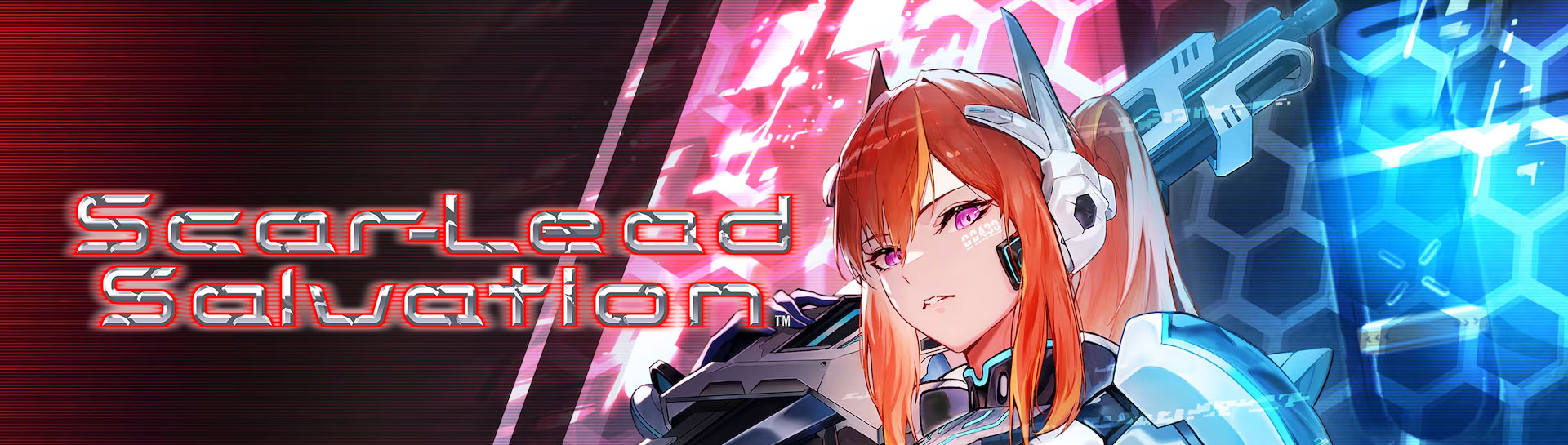
Scar-Lead Salvation is a new science-fiction, bullet hell third-person shooter developed by Compile Heart in collaboration with Neilo and published worldwide by Idea Factory International. It marks a bold departure for Compile Heart, a studio best known for JRPGs, as they venture into high-octane shooter territory. Released on May 29, 2025 for PlayStation 5, PlayStation 4, and PC (Steam) – with an Xbox Series X|S version slated for September 2, 2025 – Scar-Lead Salvation arrives with an intriguing premise and a blend of gameplay mechanics aimed at delivering a challenging, replayable experience. This article provides an official overview of the game’s story, features, and characters, along with a critical look at its innovation, appeal, and potential shortcomings.


Story and Setting
Scar-Lead Salvation is set within the confines of a mysterious military research facility where advanced weapons and experiments lurk. The story centers on Willow Martin, a young woman who awakens in an unfamiliar room with no memories of who she is or how she got there. She soon discovers the facility is crawling with hostile mechanized units and deadly apparatus. Guided only by an enigmatic AI voice over her comm device – an entity that offers advice but whose true intentions remain uncertain – Willow must fight her way through the complex in search of an escape. Every step of the journey is shrouded in questions: Who is Willow? Why was she brought here? Is the AI assistant truly an ally or a hidden adversary?
As Willow ventures deeper, the environmental storytelling hints at clandestine experiments and military secrets. The facility’s halls are sterile and mechanical, punctuated by combat encounters that reinforce the dire stakes of her situation. The facility is essentially a closed-loop battleground – an isolated compound where advanced technology has run amok. This claustrophobic backdrop serves the gameplay loop (described below) and underscores the story’s central tension: Willow is trapped in a lethal maze, racing to uncover “what truths lie at the end” of her ordeal. The narrative is delivered not through lengthy cutscenes but through in-game dialogue and discoveries. Notably, banter between Willow and the AI provides both guidance and character development, as the two form a curious relationship built on necessity and guarded trust. Their conversations add a human touch and occasional dark humor to an otherwise bleak fight for survival. Overall, Scar-Lead Salvation’s story setup is atmospheric and straightforward: a lone heroine with a blank past must survive a high-tech dungeon, and only by surviving its gauntlet will she piece together her identity and the facility’s purpose. It’s a classic “mystery box” premise with a mix of hack and slash, that lays the groundwork for both action and intrigue, though its originality may be limited – amnesia and secret labs are familiar tropes. The real test will be how engaging the revelations are as players push further into the game’s loop.
Gameplay Mechanics & Features
Scar-Lead Salvation’s gameplay is built around fast-paced, bullet hell third-person shooting with a rogue-lite twist. From moment to moment, players will engage in firefights against waves of robotic enemies, dodge through bullet barrages, and scavenge weapons – all while managing a cyclical death-and-rebirth progression.
- “Live, Die, Repeat” Loop: Death is not a game over but a learning tool. When Willow is defeated, she resurrects back at the starting point of the facility, stripped of her equipped gear, and must attempt the escape again. Each run potentially reveals new clues or story bits, so the narrative advances through multiple playthroughs. This loop design injects tension and persistence – players are encouraged to improve with each try, turning failure into progress as they “discover the truth about the military facility and Willow’s past” through repetition.
- Procedurally Generated Floors: The layout of the facility changes with every run. “Each floor will present a procedurally generated layout complete with new enemies to face and equipment to grab,” according to Idea Factory International. This means no two escape attempts are exactly the same. Randomized maps and item drops aim to keep the experience fresh and unpredictable, forcing players to stay alert. It also enhances replay value – a core trait of the roguelite genre – though it remains to be seen if the room designs and enemy placements have enough variety to stave off monotony over many cycles.
- Varied Weapons & Upgrades: Scattered throughout the facility are a wide range of armaments for Willow to collect. The game features mechanical foes and counters that with an arsenal of weapons to match. In fact, Willow can find and equip up to 10 different weapon types – from conventional guns to more exotic sci-fi arms – allowing players to adapt their play style. Weapons can also apply status effects (e.g. stagger, burn) and be enhanced via upgrades using in-game resources (called Elm Chips). Choosing the right loadout for a given run is critical; as the developers put it, “weapon selection is key to conquering the challenges”. The downside is that upon death you lose your weapons and must rearm from scratch on the next run – a punishing mechanic that reinforces the high stakes. With the release of Patch v1.02, players retain the secondary weapon which becomes the primary, explained below.
- Exo Suit Abilities & “Onslaught” Mode: Willow isn’t just reliant on guns – her advanced combat suit grants special skills that can turn the tide. Players are encouraged to dodge and even parry enemy attacks with precision to build up “Exo Force” energy gauge. When the gauge is full, Willow can activate Onslaught Mode, unleashing her suit’s full power and becoming temporarily invincible. This ultimate ability lets skilled players cut loose in clutch moments, rewarding expert timing and aggression. In addition, the suit has other unique moves: for example, the Mirage Shift lets Willow phase herself into a separate space momentarily – effectively a short-range teleport or dash that can evade incoming fire or reposition her rapidly (even in mid-air). Another ability, the Striker, is a built-in powered punch that rockets her gauntlet forward to smash targets at close range. The Striker’s risk-reward is clear: it does massive damage but requires getting uncomfortably close to dangerous foes. Mastering these abilities (along with standard cover-and-shoot tactics) adds a layer of melee and mobility strategy atop the gunplay.
All these mechanics coalesce into an experience that is challenging by design. Compile Heart tout a “high difficulty that even advanced players will find challenging,” warning that survival won’t come easily. Indeed, as players progress to higher floors, enemies grow stronger and more numerous, eventually including giant biological weapon bosses among the opposition (a stark contrast to the smaller robotic drones early on). This escalation ensures that the game’s intensity ramps up the further you get in a run, keeping veterans on their toes. The combination of bullet-hell elements and tactical resource management (conserving ammo, choosing which weapon to carry forward) creates a tense, strategic shooter.


From an innovation standpoint, Scar-Lead Salvation’s gameplay borrows from proven formulas – it’s very much in the vein of modern roguelite action games, with shades of titles like Returnal or Risk of Rain in its loop and layout. However, it tries to set itself apart with its anime-inspired presentation and a few unique twists (the Mirage Shift teleport and the heavy Striker punch, for instance, aren’t common in all shooters). The appeal here lies in replayability and mastery: players who enjoy overcoming tough odds through repeated practice will find a lot to sink their teeth into. Each death is meant to feel like a lesson rather than a loss, which can be highly satisfying for a certain audience. The game’s gunplay is complemented by those special abilities, potentially giving combat a stylish hack-and-slash flavor despite being a shooter. On the other hand, potential shortcomings in this design are apparent. Repetition could set in if the procedural generation doesn’t offer enough diversity or if the narrative revelations don’t come frequently enough to reward multiple runs. Likewise, the steep difficulty might alienate players who aren’t used to rogue-lites; frustration could trump fun if the early game is too punishing (a concern the developers themselves addressed with a post-launch patch, discussed later). Technically, the partnership with Neilo (who has action game experience) should help ensure solid mechanics.
Characters and Factions
As previously stated, Scar-Lead Salvation is more action-driven than story-driven, it does feature a few key characters and an implied faction conflict that give context to the combat. According to official descriptions, the major characters and adversaries include:

- Willow Martin: The protagonist, a young woman with no memories of her past who finds herself trapped in the facility. Despite her amnesia, Willow exhibits exceptional combat skills, reacting on instinct when thrust into battle. She wears a high-tech exosuit that enhances her abilities, suggesting she may have a military or experimental background that she herself is unaware of. Willow’s journey is not just physical survival but also self-discovery – as she fights through the gauntlet, players uncover fragments of her identity and how she’s connected to this place. Personality-wise, she comes across as determined and a bit sardonic (especially in her quips with the AI). The question hanging over her character is whether she truly is an innocent victim or if her forgotten past ties directly into the facility’s dark secrets. Official info deliberately withholds her full backstory, positioning her as an avatar of the player’s progress and curiosity.
- “AI” (Artificial Intelligence): A mysterious voice that suddenly speaks to Willow through her headset, claiming to be a military AI. This character has no known name – he is literally called “AI” in the dialogue – and has no visible form (voice-only), which heightens the ambiguity of his role. The AI offers guidance on how to navigate the facility and seems to possess extensive knowledge of the complex’s layout and systems. However, Willow (and the player) are kept guessing about his true motives. The official profile hints that Willow senses “some hidden agenda” in the AI’s words even as she can’t help but listen to them. Is this AI a part of the facility’s security system, a rogue program trying to help, or something/someone else entirely? That central uncertainty adds a layer of psychological tension: the ally might turn out to be an enemy. In their banter, the AI often references military protocols and even uses obscure idioms, which gives him a distinct personality – slightly snarky, perhaps even flirtatious in a machine-like way. This dynamic between a lone human and a possibly unreliable AI guide draws comparisons to Portal’s GLaDOS or System Shock’s SHODAN (though in this case the AI isn’t openly hostile… at least not overtly). How this relationship evolves is one of the narrative hooks of the game.
- The Facility and Its Forces: The primary antagonistic force in Scar-Lead Salvation is essentially the facility itself – or more specifically, its legions of autonomous weapons and experiments. From the moment Willow wakes up, she is assaulted by “armed machines” of various types. These include robotic soldiers, turrets, drones, and other mechanized threats one would expect in a secret military complex. Each enemy type has distinct attack patterns (some might lay down suppressing fire, others charge with explosives, etc.), requiring the player to learn and adapt strategies for each. The official materials also reveal that deeper inside, bio-engineered monstrosities join the fray – “huge biological weapons” lurking as boss encounters. A released screenshot (see above) shows one such creature: a towering, glowing organism that confronts Willow in the depths of the facility. These bio-weapons suggest that the facility’s research goes beyond simple robotics, possibly into genetic or alien technology. In terms of story, no single mastermind or organization is explicitly named as the villain. We only know it’s a “military research facility”, so one can infer some shadowy military outfit or corporation is behind it, but official info keeps this vague. This deliberate choice means the foes remain faceless – Willow is essentially fighting an army of machines and monsters rather than a person she can reason with. The lack of a named antagonist puts the spotlight on survival itself as the motivator; at the same time, it could be seen as a narrative weakness if no compelling villain figure emerges by the end. For now, the mystery faction operating this base is an unseen character in its own right, and uncovering who or what orchestrated these lethal trials will likely be part of the endgame revelation.

Overall, the character setup in Scar-Lead Salvation is minimalistic but functional for the genre. There’s the lone hero with hidden depth, the questionable guide, and a horde of impersonal enemies. This allows players to jump into the action without lengthy introductions, but it also means the emotional investment hinges on how the story payoff is handled later. From a critical perspective, this approach can be double-edged: on one hand, it’s refreshing to have a focused cast and not be bogged down by dozens of NPCs or convoluted lore in an action shooter; on the other, if the two main characters (Willow and the AI) don’t have compelling development, the game might struggle to make its story memorable. The sparring dialogue between them, as evidenced in official excerpts, is entertaining and establishes their personalities, so there’s promise that their relationship will drive the narrative forward. Fans of Compile Heart’s previous titles might notice a familiar touch in Willow’s character design and attitude – she’s depicted in key art as a stylish, strong-willed anime heroine – but unlike many JRPG protagonists, she’s isolated rather than part of a party, which gives Scar-Lead a more solitary, introspective vibe.
Graphics and Performance Issues (STEAM)
Graphics and PC performance settings are another sore point in early Steam feedback. Players report that the game has surprisingly limited configuration options for a 2025 PC title. Notably, Scar-Lead Salvation appears hard-capped at 60 FPS, which frustrates users with high-refresh monitors. Some players complained that even with VSync off the frame rate won’t go higher. Additionally, basic graphics settings are lacking – one plater pointed out there’s “no way to change resolution” in-game and very few toggles beyond the bare minimum. Advanced features like framerate uncapping or upscaling (DLSS/FSR) are missing, making the PC port feel bare-bones. Scar-Lead Salvation also does not impress visually, according to many early players. Its graphics are described as serviceable but not on par with modern AAA standards. As compared earlier, several Returnal fans expected a similar level of visual polish and atmosphere, but noted that Scar-Lead “doesn’t have the same level of visual finesse” and comes off looking like a budget title. While performance is generally stable at 60fps due to the modest graphics, the lack of options and polish gives the impression of a rushed or low-effort PC release. Overall, PC enthusiasts feel let down by the locked frame rate and limited graphical settings.


Early Steam reviews highlight several design decisions that players found unappealing or puzzling. A major complaint is the launch price of $60, which many consider far too high given the game’s quality and scope. In the forums, players balked at the AAA price tag, comparing it to bigger-budget titles: “How is this $60? … It looks interesting but not for the full price of a AAA game,” one user wrote, noting that similarly priced games offer much more content. This sentiment is echoed across reviews – the content feels thin for the cost, making the purchase hard to justify unless deeply discounted.
Another criticized design element is the game’s reliance on anime fanservice gimmicks (a hallmark of Idea Factory/Compile Heart titles) which do little to enhance gameplay. For example, the female protagonist’s armor visibly breaks away/gets skimpier as she takes damage, a feature some players found unnecessary or even immersion-breaking. “Anime and progressively stripped clothes don’t make this worth it at $60. Gameplay is not that good,” a player noted. Many agreed that such fanservice felt tacked-on, adding no real value to the experience (and in the eyes of some, detracting from it). Combined with reports of limited enemy variety and simplistic bosses, the overall design has been characterized as uninspired. To add to the disappointment, its new DLC soundtrack and artwork requires steam instead of external applications such as MP3 and PDF. A common refrain is that Scar-Lead Salvation feels like a mishmash of ideas from better games, but without the cohesion or balance to make it stand out.
In summary, early community feedback paints a clear picture of Scar-Lead Salvation’s shortcomings. Common complaints include a lackluster gameplay loop (fun combat undermined by poor roguelike depth), dated graphics and technical constraints on PC, questionable design choices, and an overall lack of polish or content for the price. These themes appear repeatedly in Steam reviews and discussions, providing a cautionary tale for interested buyers. While a few fans find some enjoyment in the game, the prevailing sentiment is that Scar-Lead Salvation misses the mark and fails to justify its cost, especially when compared to the higher-quality titles it tries to emulate.
Platforms and Release Timeline

Scar-Lead Salvation has been released across multiple platforms,
- PlayStation 5, PlayStation 4, and PC (Steam): These versions launched simultaneously on May 29, 2025 in both Japan and the West. Idea Factory International handled the worldwide publishing duties, meaning the game was available in English (and other languages) right out of the gate. Notably, in Japan the PS4 edition is digital-only (no physical disc), whereas PS5 received both physical and digital releases – and in the West, physical editions were also made for PS5. The PC version on Steam is likewise available worldwide and supports multiple languages (English, Japanese, French, Spanish, and both Traditional and Simplified Chinese, according to official specs). The choice to include PC from day one reflects Idea Factory’s growing focus on global markets, as in the past some Compile Heart games were console-exclusive at launch.
- Xbox Series X|S: The game is scheduled to hit Xbox Series consoles on September 2, 2025. This release will come a few months after the initial launch, presumably to allow extra development and testing time for the port. It’s confirmed that on Xbox the title will be available both digitally and with a physical release (at least in North America/Europe via IFI’s online store). The Xbox version should include all updates made to the game since the May launch, and being on the modern Series X|S hardware, it will likely be on par with the PS5 version’s performance. There is no Xbox One version mentioned, implying it’s targeting the current-gen hardware only. The slight delay for Xbox isn’t unusual for smaller Japanese studios, as they often prioritize platforms with larger domestic audiences first (PlayStation and PC).
- Nintendo Switch (and others): As of now, no Switch version has been announced. The game’s engine and performance requirements (it’s a 3D Unreal Engine shooter with lots of effects) might be a bit beyond what the Switch can comfortably handle without significant downgrades. Compile Heart has also historically been less active on Nintendo platforms for their 3D titles. Similarly, there’s no mention of a PS5-specific enhanced edition beyond the base game (the PS5 version is essentially the same game with probably higher resolution/frame rate compared to PS4). It’s strictly PS4/PS5, PC, and upcoming Xbox Series – covering the major current platforms except Switch. This platform strategy should give the game a wide reach among core gaming audiences.


In terms of release timeline, the approach is interesting: the game hit PlayStation and PC just in time for early summer 2025, and will hit Xbox at the tail end of summer. The staggered Xbox launch could serve to reignite marketing later in the year, keeping Scar-Lead Salvation in the news beyond its initial release window. It also suggests that Idea Factory International is committed to expanding their audience, since an Xbox release (especially physical) is somewhat rare for mid-tier Japanese titles. From a critical perspective, having a slightly later Xbox release isn’t likely to affect the game’s content, but it does mean early reviews (which all come from the PS5/PC version) will shape public opinion well before the Xbox crowd gets the game. Those picking it up on Xbox will benefit from any post-launch patches and possibly have a smoother experience from day one.


DLC and Post-Launch Support
Idea Factory/Compile Heart have supplemented Scar-Lead Salvation’s base game with a few extras and updates right at launch, and they seem prepared to continue supporting the game post-release:
- Deluxe Edition & Bonus DLC: Alongside the standard release, a Digital Deluxe Edition was offered that includes the game plus digital bonuses. Notably, this edition grants access to two DLC weapon packs – the “Seeker Glow” and “Photon Strike” weapons – which are also available as free DLC downloads for all players at launch. These appear to be bonus guns that players can use in-game, possibly as a thank-you to early adopters. Being free, they ensure no split in the player base or “pay-to-win” concerns; it’s simply extra content. In addition to the weapons, the Deluxe bundle comes with a 44-page digital art book and a 32-track digital soundtrack album, catering to fans who want to dig into concept art or enjoy the game’s music outside of play. Physically, in Japan there was also a special limited edition for PS5 with physical goodies (artbook, soundtrack CD, etc.), but for the purposes of this review, the key point is that all gameplay-affecting DLC is free and available from day one. There are no announced paid expansions or microtransactions beyond the initial purchase – a relief for players who might worry about content being held back for DLC later.
- Patches and Balance Updates: Very shortly after launch, the developers released Patch v1.02 (the game version at release was v1.0 or 1.01, so this was a quick update) which implemented several gameplay adjustments based on early feedback. According to official patch notes, this update added a “Retry Portal” at the base camp (the hub area) that players can use to return to the last floor they died on. This is a significant quality-of-life change – originally, a death meant restarting completely from the first floor of the facility; with the Retry Portal, there is now an option to effectively continue progression from a later checkpoint. It suggests the developers recognized the difficulty might have been too punitive, and they introduced a way to mitigate the frustration of losing all progress. The patch also changed the death penalty: now, when you die, you retain your secondary weapon into the next run (it becomes your new primary) while only the original primary is lost. This again softens the blow of failure, allowing players to carry over at least one weapon they had found. On the other hand, to keep the game challenging, the patch increased enemy and boss HP and attack power slightly, balancing out the new player advantages. They also reduced the cost of weapon upgrades (using the in-game currency) to encourage players to make use of the upgrade system more frequently. All these changes indicate a responsive approach to game balance – the developers are clearly watching how players experience the game and are willing to tweak mechanics to hit the sweet spot between “brutal” and “fair.” For a game so centered on difficulty, such post-launch tuning is crucial. The quick rollout of patch 1.02 (within a week of release) shows a commitment to post-launch support and an acknowledgment of community feedback.
- Future Support: Beyond the initial patch and bonus weapons, no additional DLC packs or expansions have been officially announced as of this writing. It’s possible that if the game performs well, the developers could consider content updates (for example, new weapons, extra modes, or story extensions) down the line, but nothing has been confirmed. The focus in the short term is on polishing the base game experience and delivering the Xbox port in September. Idea Factory International is known to sometimes add cosmetic DLC (like costume packs) to their games, but Scar-Lead Salvation being a shooter makes that less of a focus than it would be in, say, a Neptunia RPG. One area to watch will be whether they introduce any challenge modes or leaderboards for the roguelite aspect – currently, no mention of an endless mode or scoring system has been made. If players engage heavily, the devs might patch in additional gameplay options (this is speculative, of course). For now, players can be satisfied that all content is accessible in-game without extra purchases, and the developers are actively working to improve the game’s balance and stability.
In summary, post-launch support for Scar-Lead Salvation looks solid so far, with free content and timely fixes. The inclusion of free DLC weapons from day one is a nice gesture that adds value, and the rapid patch suggests the team is dedicated to making the game the best it can be, rather than releasing and forgetting it. This bodes well for the community – it means early adopters’ criticisms are being heard. However, one could also view the need for a balancing patch so soon as evidence that the game’s initial tuning might not have been perfect out of the box (e.g. perhaps it was too hard or progression was too unforgiving initially). The silver lining is that these issues are being addressed before the wider Xbox audience jumps in. Prospective players can expect a challenging experience at launch, but with the comfort that the toughest edges have been slightly sanded down by updates – without dulling the overall difficulty that is integral to the game’s identity.
Conclusion

Scar-Lead Salvation presents an interesting case of a developer stretching outside its comfort zone to deliver something new. It combines Compile Heart’s familiar anime aesthetic and character-centric storytelling with gameplay mechanics more akin to Western rogue-lite shooters. The result is a game that aims to provide intense action and replayability while weaving a light sci-fi mystery in the background. There’s a lot that works in theory: the looping death mechanic tied to story progression is a compelling hook (when done well, it can make each failure feel meaningful rather than frustrating), and the procedural generation promises fresh challenges on each run, enhancing longevity. The combat toolkit – guns galore plus special moves like dashes and power punches – suggests a satisfying depth, letting players experiment with playstyles and rewarding skillful execution. Furthermore, the proactive post-launch support indicates that the developers are invested in refining the experience and addressing player concerns, which is a positive sign for the game’s ongoing quality.
That said, some caution flags are worth noting. Scar-Lead Salvation’s ambition to be a hardcore rogue-lite shooter could limit its appeal to a niche audience. The very features that distinguish it – high difficulty, run-based progression, lack of hand-holding – can also alienate gamers who prefer more narrative-driven or forgiving experiences. The story, while intriguing, appears to be intentionally sparse and slow-burn, which might leave story-focused players wanting more payoff between the bouts of combat. It will be crucial that the moment-to-moment gameplay stays engaging enough to motivate repeat runs; otherwise the loop can become tiring. Repetition is enjoyable when the core gameplay is stellar, but if enemy variety or level variety is insufficient, even a rogue-lite can feel grindy. The fact that the first batch of players prompted a rebalancing patch implies the initial difficulty curve might not have been perfectly tuned – an aspect to keep an eye on as more feedback comes in. Technically, the game doesn’t boast cutting-edge graphics, so its success really hinges on gameplay and design rather than spectacle.
On the innovation front, Scar-Lead Salvation is more evolutionary than revolutionary. It doesn’t reinvent the shooter genre, but it does transplant Compile Heart’s style into a genre they haven’t fully explored before. For fans of the developer, this could be a refreshing change of pace – a chance to enjoy their flair for character design and quirky ideas in a new format. For fans of rogue-lite shooters, the game offers another entry in a growing subgenre, one that might distinguish itself with its narrative framework and Japanese sci-fi flavor. If it manages to strike the right balance of challenge and reward, Scar-Lead Salvation could become a cult hit, the kind of game that speedrunners and hardcore enthusiasts rally around to conquer its highest difficulties. If it falls short (for example, if the story payoff is weak or the runs feel too repetitive), it may be remembered as an experimental curiosity in Compile Heart’s catalog.
Conclusion
Scar-Lead Salvation comes across as a bold, if not wholly unorthodox, fusion of anime-style game with hack and slash mechanics. Its story and setting provide just enough intrigue to set the stage, its gameplay systems promise depth and intensity for those willing to master them, and its developers’ support post-launch shows a dedication to making the game as good as it can be. The game’s innovation lies in this cross-pollination of ideas and the courage to challenge players; its appeal will depend on how satisfying that challenge turns out to be.
For now, Scar-Lead Salvation stands as one of 2025’s more unique releases – a title that both previews and early impressions suggest could thrill a particular segment of gamers looking for a tough, loop-driven action experience, even as it cautiously invites a broader audience to step out of their comfort zone and give it a shot. As Willow Martin fights to escape her labyrinth, players will be testing their own mettle – and if the official tagline “Live. Die. Repeat.” holds true, they might just keep coming back for one more run.
Disclosure: TKN received a free review copy of this product from https://www.game.press
Subscribe to our articles, and don’t miss upcoming, exclusive content!